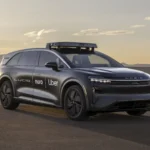
In a significant step forward for the future of autonomous driving, Uber and Volvo are collaboratively investing a staggering $300m into a program aimed at bringing fully self-driving cars to our streets as soon as 2021. This comes on the heels of Bloomberg’s report asserting that Uber’s initial fleet of autonomous vehicles will be making their debut in Pittsburgh, USA, this September.
The CEOs of both Uber and Volvo have commented on the ambitious partnership, highlighting the potential benefits and far-reaching implications for the automotive industry.
Volvo’s CEO moves beyond celebration, stating, “Volvo is a world leader in the development of active safety and autonomous drive technology and possesses unrivaled safety credentials. We are thrilled to be the partner of choice for Uber, a world-leading tech company. Our partnership brings Volvo to the forefront of this revolutionary technological shift in the automotive industry.”
Uber’s CEO, Travis Kalanick, commented on the collaboration from a more humanitarian perspective. “Over a million people die in car accidents every year. These are tragedies that self-driving technology can help solve, but we can’t do it alone. That’s why our partnership with Volvo, a vehicle development leader and safety champion, is of paramount importance. Together, by leveraging the capabilities of Uber and Volvo, we will propel the future forward.”
Interestingly, Uber does not intend to construct its self-driving cars instead, it plans to capitalize on what manufacturers like Volvo are already accomplishing by installing its proprietary technology into these vehicles. However, whether Uber plans to shift into manufacturing in the future remains unclear, especially given the recent news about Uber’s acquisition of the self-driving truck startup Otto, a venture established by ex-Googlers based out of San Francisco. According to the same Bloomberg report, Uber spent a whopping $680m to acquire Otto, an investment that appreciates to 1 percent of Uber’s current valuation, standing at a mind-boggling $68b.
[Insert Image Here: Uber-Volvo Partnership]
Meanwhile, rivals Ford have already revealed plans to unleash fully automated vehicles by 2021, and industry insiders suggest BMW will soon follow suit.
But what about Uber users in Pittsburgh? For the time being, Uber’s test cars will operate with safety drivers on board, their hands poised to take control should the vehicle confront an unexpected obstacle. A co-pilot also occupies the passenger seat, documenting the ride while a network of cameras record every detail, ensuring any snags in the system can be swiftly rectified. Each vehicle is fitted out with a tablet computer in the back seat, informing riders that they are part of an autonomous vehicle trial and explaining the proceedings. Ultimately, Uber aims to transition us to a world without drivers.
When talking about autonomous driving, safety concerns inevitably emerge. Volvo has effectively addressed this issue by pledging to develop cars that will virtually eliminate car crash deaths by 2020. Here’s how:
Adaptive Cruise Control: This system uses radar, and sometimes other sensors, to detect vehicles ahead and maintain a safe following distance.
Auto Lane Keeping Assist: Cameras monitor lane lines and road edges, steering the car to stay in its lane.
Collision Avoidance: By detecting obstacles through radar, cameras or other sensors, this technology can warn the driver or even apply brakes automatically.
Pedestrian Detection: Cameras programmed to identify human shapes can alert drivers or apply brakes automatically to avoid hitting pedestrians.
Large Animal Detection: This system detects large animals in front of the car, thus averting collisions that are potentially deadly for both the animal and the vehicle’s occupants.
With such advanced safety measures in place, is it any wonder that Uber has chosen to collaborate with Volvo? While we may speculate, only time will reveal the scope and impact of this intriguing partnership.
Paul Balo is the founder of TechBooky and a highly skilled wireless communications professional with a strong background in cloud computing, offering extensive experience in designing, implementing, and managing wireless communication systems.
We use cookies to ensure that we give you the best experience on our website. If you continue to use this site we will assume that you are happy with it.